 By
By 
Crime scene video analysis has become one of the most essential investigative tools in modern law enforcement. With surveillance cameras watching over cities, homes, and businesses, investigators now rely heavily on digital video evidence to uncover hidden details, identify suspects, and reconstruct events with precision. This advanced field blends technology, investigative techniques, and forensic science to transform raw footage into powerful visual evidence. As digital video becomes more widespread, crime scene video analysis continues to play a critical role in solving cases faster and more accurately than ever before.
The true value of crime scene video analysis lies in its ability to reveal what the human eye often misses. Even when recordings appear blurry, dark, or distorted, experts can extract meaningful information through enhancement, stabilization, and high-tech measurement tools. This process not only uncovers new evidence but also clarifies the context of what happened, allowing investigators to move forward with confidence.
Why Crime Scene Video Analysis Is Crucial for Today’s Investigations
Video recordings have become a central part of nearly every criminal investigation. Law enforcement teams depend on footage from security cameras, smartphones, traffic systems, and dash cams to verify timelines, locate suspects, and support witness statements. But raw footage often lacks clarity or consistency, which is why crime scene video analysis is so important.
With proper analysis, investigators can determine how events unfolded and whether actions captured on camera support or contradict reports. Video acts as an unbiased witness, offering a clear view of the scene without personal interpretation. It helps verify critical details such as direction of movement, the objects individuals carry, the type of vehicle involved, or the exact moment a crime occurred.
The rapid growth of digital surveillance has created an environment where video evidence is readily available. Yet without professional interpretation and forensic-grade tools, even the best footage may fail to tell the full story.
How Experts Approach Crime Scene Video Analysis
When professionals analyze video evidence, they begin with careful preservation. Maintaining the original quality is essential, as even small errors can affect the accuracy of findings. Experts typically work with duplicated copies to ensure that the original footage remains intact throughout the investigation.
Once the video is preserved, analysts explore the content with a detailed, frame-by-frame approach. They look for inconsistencies, hidden movements, unusual shadows, and small actions that may hold significant value. This detailed review allows them to identify areas that require enhancement, reconstruction, or clarification.
Crime scene video analysis involves far more than watching a video. Experts use advanced tools to adjust brightness, remove noise, correct lens distortion, and stabilize shaky recordings. Through these methods, unclear details become visible, allowing investigators to draw accurate conclusions from even the most challenging footage.
The Technology Behind Crime Scene Video Analysis
The effectiveness of crime scene video analysis depends heavily on the tools used. Modern video analysis technology is highly specialized, designed specifically to handle forensic challenges that consumer editing software cannot address.
Professional tools allow analysts to enhance low-light scenes, restore distorted images, and recover details from compressed or pixelated footage. These enhancements must be performed with precision to avoid altering the meaning of the video. The goal is always clarity without distortion of facts.
Measurement tools within these systems are particularly important. Analysts can calculate distances, object sizes, and positions within a scene with remarkable accuracy. Such measurements play a vital role in determining the height of a suspect, the trajectory of movement, or the placement of key objects at the crime scene.
Some platforms utilize artificial intelligence and advanced algorithms that can detect motion, track individuals, and identify patterns across multiple frames. These capabilities offer investigators valuable insight that improves the accuracy of their findings.
How Crime Scene Video Analysis Speeds Up Case Resolution
One of the greatest strengths of crime scene video analysis is its ability to significantly accelerate investigations. Instead of relying solely on interviews or incomplete eyewitness accounts, investigators can refer directly to visual evidence. Video recordings often reveal information instantly, helping detectives identify suspects sooner and build stronger cases in less time.
Clear footage helps teams rule out false leads and focus on verifiable information. Even when the footage is unclear, expert enhancement can reveal critical evidence that quickly redirects the investigation. When timelines are tight, the ability to clarify visual details can mean the difference between solving a case swiftly or experiencing months of delays.
Forensic video analysis further supports this process by providing a scientific foundation for all visual interpretations. This ensures that every enhanced frame, measurement, or reconstruction is backed by validated forensic techniques. Together, these methods create a powerful combination that accelerates case resolution while maintaining the highest standards of integrity.
Clarifying Complex Scenes Through Video Enhancement
Crime scenes can be chaotic, making it difficult for investigators to understand every detail. Lighting conditions, weather, movement, and camera angles often make footage challenging to interpret. Crime scene video analysis provides clarity by enhancing images to bring out details that are not immediately visible.
Enhancement tools help remove visual noise, sharpen edges, increase contrast, and improve clarity without altering the truth of the footage. This visual clarity allows investigators to identify objects, read license plates, examine clothing patterns, or study interactions between individuals.
Stabilization is another commonly used technique that helps align frames in shaky recordings. This allows analysts to focus on important details that would otherwise be obscured by movement. Whether the footage came from a handheld device or a moving vehicle, stabilization ensures that every frame can be examined with precision.
Reconstructing Crime Scenes with Digital Accuracy
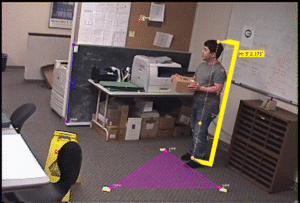
Reconstruction is one of the most powerful applications of crime scene video analysis. Through precise measurements, analysts can recreate scenes digitally and determine how events unfolded. This includes identifying where individuals stood, how far objects moved, or how vehicles interacted during an incident.
These reconstructions help clarify details that are difficult to visualize in real time. They also provide powerful courtroom presentations that help judges and juries understand complex events. With tools capable of converting video frames into spatially accurate models, investigators can present clear visual explanations supported by scientific measurements.
Reconstruction methods are enhanced by the principles of forensic video analysis, which ensure that all evidence used is authentic, reliable, and admissible in court.
Supporting Court Cases with Reliable Video Evidence
Digital video evidence must be handled carefully to maintain credibility in legal proceedings. Courts require analysts to follow clear methodologies and preserve the integrity of the original footage. Crime scene video analysis ensures that all enhancements, measurements, and reconstructions remain faithful to the source.
Forensic video analysis plays a supporting role by verifying the authenticity of videos, detecting any signs of tampering, and documenting all steps taken during enhancement. This documentation is crucial in courtrooms where transparency and scientific accuracy are required.
Reliable video evidence often becomes a turning point in criminal cases. When enhanced correctly, it can verify witness statements, disprove false claims, and provide clear visual proof of key events.
Why Professional Tools Make the Biggest Difference
Advanced platforms like those developed by Cognitech offer investigators the power, accuracy, and flexibility needed to handle even the most demanding cases. These professional solutions integrate enhancement, reconstruction, authentication, and measurement capabilities within a single system.
Experts choose these tools because they support a complete forensic workflow. Analysts can manage metadata, examine multiple video formats, document each enhancement step, and generate court-ready reports that reflect the highest industry standards.
From tracking a suspect’s movements to uncovering hidden objects in low-light footage, these tools give investigators the confidence they need to present accurate and defensible evidence.
Conclusion
Crime scene video analysis has revolutionized how investigators solve cases, offering clarity and accuracy that traditional investigative methods alone cannot provide. With the ability to reveal hidden details, reconstruct events, and support courtroom testimony, this method has become an essential part of modern law enforcement and forensic science.
By combining advanced technology with expert interpretation, crime scene video analysis speeds up investigations and ensures that critical evidence is never overlooked. As digital cameras continue to capture more of the world around us, the importance of reliable and scientifically grounded analysis will only continue to grow.