 By
By 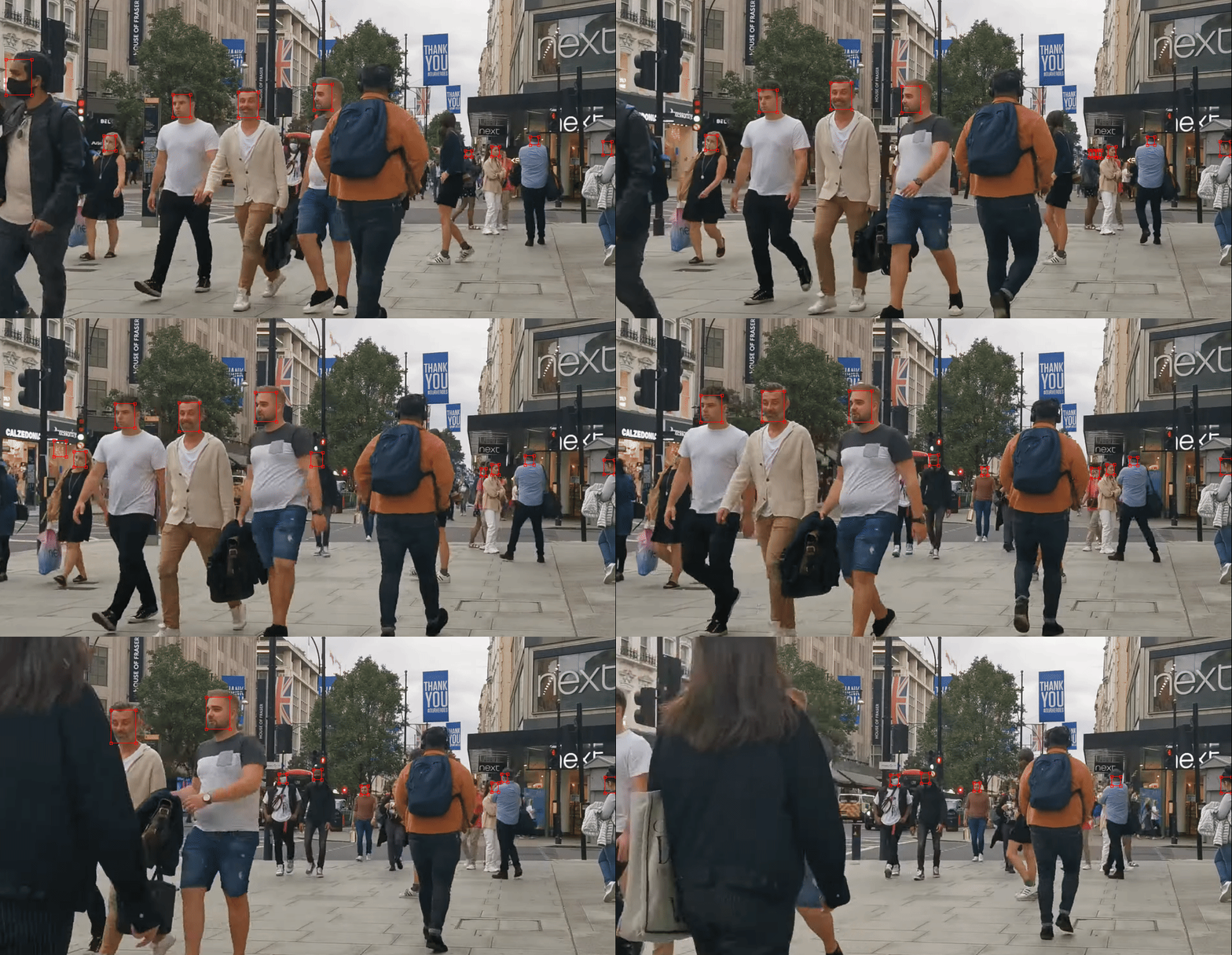
Cognitech and similar industry leaders have demonstrated how advanced forensic technologies can turn unclear video footage into powerful visual evidence. In modern investigations, video recordings often play a decisive role, yet the quality of raw footage is not always sufficient to reveal what truly happened. This is where forensic video enhancement becomes a critical problem-solving tool, helping investigators, legal teams, and security professionals uncover facts that may otherwise remain hidden.
The Growing Role of Video Evidence in Critical Cases
Video footage is now one of the most common forms of evidence in criminal, civil, and corporate investigations. Surveillance cameras, body-worn cameras, mobile devices, and public recordings capture events in real time, often without bias. However, poor lighting, low resolution, motion blur, and compression can significantly reduce the usefulness of this footage.
Forensic video enhancement addresses these challenges by improving the clarity of recordings while maintaining their authenticity. When cases depend on identifying individuals, understanding sequences of events, or verifying actions, enhanced video can provide the visual clarity needed to move investigations forward.
What Makes Forensic Video Enhancement Case-Critical
Unlike standard video editing, forensic video enhancement follows strict scientific and legal standards. The goal is not to change the content of the footage but to make existing visual information easier to interpret. Every enhancement step is documented, repeatable, and defensible.
This disciplined approach is essential in critical cases, where evidence must withstand scrutiny from courts, opposing experts, and investigative authorities. Proper forensic video enhancement ensures that conclusions are based on objective visual data rather than assumptions or subjective interpretation.
Solving Identification Challenges
One of the most common obstacles in critical cases is identifying people captured on video. Faces may be partially obscured, lighting may be uneven, or the subject may be in motion. Forensic video enhancement techniques such as contrast optimization, noise reduction, and frame-by-frame analysis help clarify these visual elements.
By improving visibility without altering the original content, investigators can better assess facial features, clothing details, and distinguishing characteristics. In many cases, this added clarity supports witness statements or helps rule out false assumptions, contributing to fair and accurate outcomes.
Clarifying Actions and Timelines
Critical cases often hinge on understanding exactly what happened and when it happened. Raw video footage can be misleading if frames are blurred, unstable, or poorly synchronized. Forensic video enhancement helps stabilize footage and improve temporal clarity so that movements and actions can be analyzed more accurately.
Enhanced video allows investigators to examine sequences of events in detail, reducing ambiguity and supporting precise timeline reconstruction. This clarity is especially valuable in cases involving accidents, use-of-force incidents, or disputed interactions.
Enhancing Low-Quality and Legacy Footage
Not all video evidence comes from modern high-definition sources. Many critical cases involve older surveillance systems or recordings captured under less-than-ideal conditions. Forensic video enhancement is particularly effective in extracting usable information from these challenging sources.
Through careful analysis and scientifically validated enhancement techniques, analysts can reduce visual noise, improve contrast, and highlight relevant details. Even subtle improvements can make the difference between unusable footage and actionable evidence.
Supporting Legal Decision-Making
In legal proceedings, visual evidence must meet high standards of reliability and transparency. Forensic video enhancement supports legal decision-making by presenting clearer footage that remains faithful to the original recording.
Courts value enhancement processes that are fully documented and repeatable. When experts can explain how and why enhancements were applied, judges and juries gain greater confidence in the evidence presented. This transparency helps ensure that video evidence contributes to justice rather than confusion.
The Role of Specialized Tools and Software

Advanced forensic video enhancement relies on purpose-built software designed specifically for evidentiary analysis. These tools allow analysts to apply precise adjustments, document every step, and maintain a clear chain of custody.
In certain investigations, related tools such as video redaction software may also be used alongside forensic video enhancement. Redaction helps protect sensitive or private information while preserving the evidentiary value of the footage. When used appropriately, it ensures compliance with privacy standards without undermining the integrity of the enhanced video.
Ethical Responsibility in Critical Cases
Ethics play a central role in forensic video enhancement. Analysts must clearly communicate what the footage can and cannot show, avoiding overinterpretation or misleading conclusions. Enhancements should always be grounded in scientific principles and supported by documentation.
This ethical responsibility is especially important in critical cases, where outcomes can significantly impact lives, reputations, and legal decisions. By adhering to professional standards, forensic video enhancement supports fair and objective case resolution.
Real-World Impact of Forensic Video Enhancement
Across law enforcement, legal systems, and corporate investigations, forensic video enhancement has helped resolve complex cases. Clearer video can corroborate testimony, disprove false claims, and provide visual context that written evidence alone cannot offer.
In many situations, enhanced video has been instrumental in uncovering overlooked details, guiding investigative strategies, and bringing clarity to disputed events. Its value lies not in dramatization but in its ability to reveal what is already present within the footage.
The Future of Case Resolution Through Video Enhancement
As video continues to dominate modern evidence, forensic video enhancement will remain essential for solving critical cases. Advances in processing methods and analytical tools are expanding the possibilities for clarity while reinforcing the importance of scientific rigor.
Organizations that rely on video evidence increasingly recognize that proper enhancement is not optional but necessary. By combining expertise, ethical standards, and advanced technology, forensic video enhancement will continue to play a decisive role in uncovering the truth.
Conclusion
Forensic video enhancement solves critical cases by transforming unclear footage into meaningful visual evidence without compromising authenticity. Through careful, documented, and ethical processes, it helps investigators identify subjects, clarify events, and support legal decision-making.
When applied by trained professionals using specialized tools, forensic video enhancement becomes a powerful ally in the pursuit of truth, ensuring that critical cases are guided by clear, reliable visual information.