
 By
By 
In the modern digitalized world, where everything moves at a very high pace, the possibility to turn spoken words into written ones has changed the way we communicate, work, and create. The need to have quick and precise transcription is increasing at a high rate, whether you are a content creator, a businessperson, or a student. The speech to text transcribing process is no longer a luxury but a necessity to be efficient and accessible.
This technology is transforming the idea of productivity, not to mention voice assistants and automated meeting notes. But what is it and how does it work and why should you begin using it today? Let’s explore.
Why Speech to Text Is Transforming Digital Workflows
With the emergence of speech recognition technology, it has never been easier to turn voice into written words. This is not a mere innovation of convenience but of timesaving and accuracy in everyday work.
Transcription of speech to text enables you to avoid manual typing work, which allows you to focus on developing your ideas. Professionals across different industries are implementing this new system because it enables them to work faster while maintaining their existing performance standards.
Journalists use recording devices to capture interviews, which they instantly transform into written transcripts. Meetings need no dedicated note takers because businesses can record their sessions as they happen. This change is transforming workflows into smarter and efficient ones.
How to Transcribe Speech to Text Efficiently
Select the Right Environment
Transcription requires clear audio as its fundamental element. The results suffer from three factors, which include poor microphone quality and mixed voice recordings and environmental sounds. Recordings should always occur in locations that maintain total silence and face no outside interruptions.
Speak Clearly and Naturally
Clarity remains essential because transcription tools possess actual intelligence. The software achieves accurate word recognition when users speak at a slow speed using clear pronunciation. The process of writing sentences requires time because rushing leads to writing errors.
Review and Edit the Output
Even the most excellent tools are not flawless. Once you have transcribe speech to text, you should take time to go through it. Editing makes grammar, punctuation, and context correct and refined.
Key Benefits of Using Speech to Text Technology
The benefits of speech-to-text applications are not merely a matter of convenience. They introduce quantifiable localized gains to productivity and communications.
Quick content creation over manual typing, which enables users to take less time to accomplish tasks.
These tools enhance accessibility besides speed. Persons with disabilities or those who have difficulties typing can easily convey their ideas using speech. This is the inclusivity that renders technology more human.
The most important benefit of this system: The system lets you dictate all types of written materials while you continue your other activities. The system allows you to manage your time effectively. The system prevents you from experiencing overwhelming work.
Real-World Applications of Speech to Text
People in their daily lives use speech-to-text software to provide hands-free access to their work. Professionals in contemporary work environments use speech-to-text software because it operates in multiple fields. Health professionals use voice transcription technology to create patient records through efficient and accurate audio documentation. The technology streamlines their administrative duties, which helps them maintain focus on their patient responsibilities.
Students are allowed to record their lectures, which they can convert into notes. The process enables them to study their material through efficient methods. The process enables teachers to create study materials without spending extensive time on typing work. Marketers and content creators use this technology to create blog scripts and social media content at a faster rate. The system allows users to develop their content through audio recording, which they will refine in later sessions.
The solution has gained popularity among companies for their customer service operations. The service enables companies to transcribe their recorded phone calls, which they can analyze to improve service quality and identify common customer issues.
Challenges and How to Overcome Them
Businesses face two major problems, which they need to solve through their operational methods. The system has multiple benefits for users, but it presents various challenges that need to be resolved. Your understanding of equipment limitations will improve your operational performance.
Accuracy in noisy environments is one of the problems. The software may be confused by background sounds and cause errors. The answer is easy: use good microphones and record in controlled conditions.
The other difficulty is dealing with various accents and dialects. Even though the modern systems are getting better, they might still have a problem with some speech patterns. This limitation can be overcome by training the software or by using sophisticated tools.
Another area where mistakes can be made is in technical vocabulary. Complex terms are commonly used in specialized industries and might not be easily identified. Manual editing is necessary in these situations to provide accuracy.
The AI in Speech to Text Evolution
The development of speech-to-text technology accelerates because artificial intelligence provides advanced capabilities to develop the system. The development of machine learning algorithms shows continuous improvement because users and real-world data provide feedback to enhance their performance. Future systems will enable instantaneous language conversion. through emotional detection capabilities, and they will allow users to better comprehend the context while engaging in communication. The best results with speech-to-text tools can be achieved through dedicated practice.
Organizations should implement best practices for this technology to achieve optimal operational performance through accurate results and efficient processes. The first step involves choosing software that meets your specific needs. The transcription software market contains two categories, which include casual applications and professional transcription software. You must check your microphone and audio settings before you start your recording session. The final product experiences a major transformation because even the smallest adjustment creates a substantial impact. You should talk in a natural manner while maintaining clear speech. You will discover the most effective transcription tool rhythm after spending time with the software.
Lastly, do not omit the editing stage. Although your output might seem correct, a quick check will make sure that you have polished and professional content.
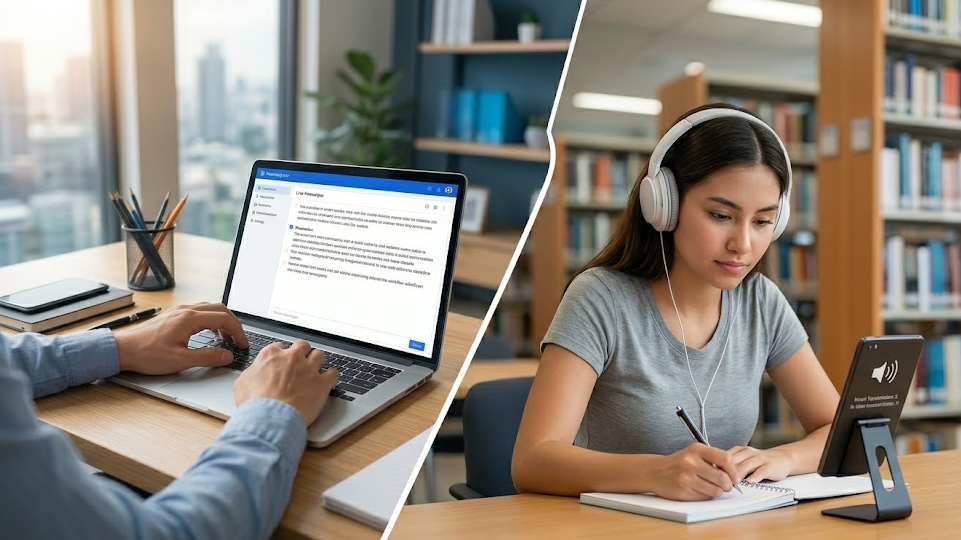
The Future of Voice-Driven Productivity
The rise in voice technology usage indicates that users now prefer to interact through more natural methods. The process of typing will continue to exist, but using speech has developed into a major method of interacting with digital systems.
The implementation of speech-to-text systems by various industries will enhance operational efficiency and improve accessibility and customer experience. The ability to transcribe thoughts into written form instantly provides people and organizations with new capabilities.
Future years will see the integration of voice-controlled technologies into additional systems, which will lead to the creation of smarter ecosystems that respond to user requirements in real time.
Conclusion
The accessibility of speech-to-text technology has advanced from being a luxury to becoming an essential productivity tool that enhances accessibility and communication capabilities. The ability to transcribe spoken language into written text provides students, professionals, and content creators with a powerful tool that improves their productivity.
The best way to unlock technology potential requires you to understand its benefits and challenges and its optimal operational methods. The evolution of AI technology will lead to communication methods that focus on human needs while achieving effective and simple user interactions.
The current world requires businesses to adopt this innovation because speed and accuracy have become essential business requirements.
FAQ
1. What is the best way to improve speech-to-text accuracy?
The best way is to use a high-quality microphone, speak clearly, and record in a quiet environment. Editing the final output also helps ensure accuracy.
2. Can speech-to-text tools understand different accents?
Yes, many modern tools can recognize various accents, but accuracy may vary. Advanced AI tools are continuously improving in this area.
3. Is speech-to-text suitable for professional use?
Absolutely. Many industries, including healthcare, education, and marketing, rely on speech-to-text technology for efficient documentation and content creation.